
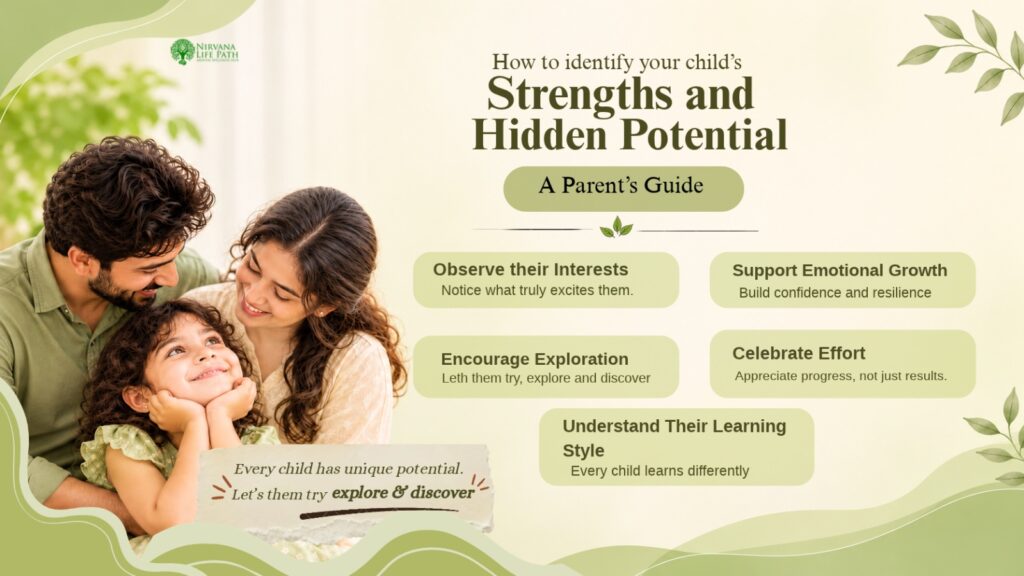
Every child is unique. Some children enjoy solving puzzles, while others love drawing, storytelling, music or physical activities. Some are naturally curious, while others express themselves through creativity and imagination.
As parents, understanding these individual differences is an important part of supporting your child’s development.
But how can you identify your child’s natural strengths and help them reach their full potential?
Let’s explore.
1. Observe Your Child’s Everyday Interests
Notice what activities make them excited and engaged.
For example:
– Does your child enjoy drawing and painting?
– Are they interested in numbers and puzzles?
– Do they enjoy communicating and telling stories?
– Are they curious about nature and science?
– Do they enjoy helping others?
These interests can provide useful clues about your child’s preferences and developing abilities.
2. Understand That Every Child Learns Differently
Not every child learns in the same way.
Some children understand concepts better through pictures and visual demonstrations. Others prefer listening, reading, practical activities or hands-on experiences.
Instead of comparing your child with classmates or siblings, try to understand which learning approaches help them participate and understand better.
Remember, learning preferences can change depending on the subject, environment and stage of development.
3. Encourage Exploration Without Pressure
Children need opportunities to explore different activities before discovering what they enjoy.
Encourage them to participate in:
– Art and craft activities.
– Sports and outdoor games.
– Music and dance.
– Reading and storytelling.
– Science experiments.
– Group activities and teamwork.
Avoid forcing children to excel in every activity. The purpose is to help them explore, build confidence and discover their interests.
4. Pay Attention to Emotional Intelligence
Academic performance is only one aspect of a child’s development.
Emotional intelligence also plays an important role in everyday life.
Observe how your child:
– Expresses feelings.
– Handles disappointment.
– Communicates with others.
– Responds to challenges.
– Builds friendships.
– Understands other people’s emotions.
Parents can support emotional development by encouraging open conversations, listening without judgment and helping children understand their feelings.
5. Avoid Comparing Your Child With Others
Every child develops at their own pace.
Comparisons can create unnecessary pressure and affect a child’s confidence.
Instead of saying, “Why can’t you be like your friend?”, recognize individual achievements and appreciate consistent effort.
Celebrate small improvements and encourage your child to try again when something feels difficult.
6. Consider Professional Guidance When Needed
Sometimes parents may need additional support to understand their child’s developmental, educational or emotional needs.
Professional guidance can help parents explore a child’s interests, understand learning challenges and identify areas where additional support may be useful.
Depending on the concern, a qualified child psychologist, educational professional or career counselor can recommend appropriate assessments and guidance.
Assessment results should be interpreted carefully and should never be treated as a fixed prediction of a child’s future.
7. Create an Environment That Supports Growth
A supportive home environment can make a significant difference in a child’s development.
Here are some simple practices:
– Give your child time to play and explore.
– Encourage questions and curiosity.
– Provide opportunities to learn new skills.
– Appreciate effort rather than focusing only on results.
– Allow children to make age-appropriate decisions.
– Maintain open communication.
Most importantly, let children know that they are valued for who they are, not just for what they achieve.
Final Thoughts
Identifying your child’s strengths is not about finding one particular talent or choosing a career at an early age. It is about understanding their interests, encouraging exploration and creating opportunities for healthy development.
Every child has the potential to grow in their own way. With patience, encouragement and the right guidance, parents can help children develop confidence and discover new possibilities.
At Nirvana Life Path, we believe in supporting individuals through personalized guidance, psychological insights and holistic wellness approaches.
Explore our services to learn more about supporting your child’s growth and development.
Take the first step towards understanding your child’s potential.